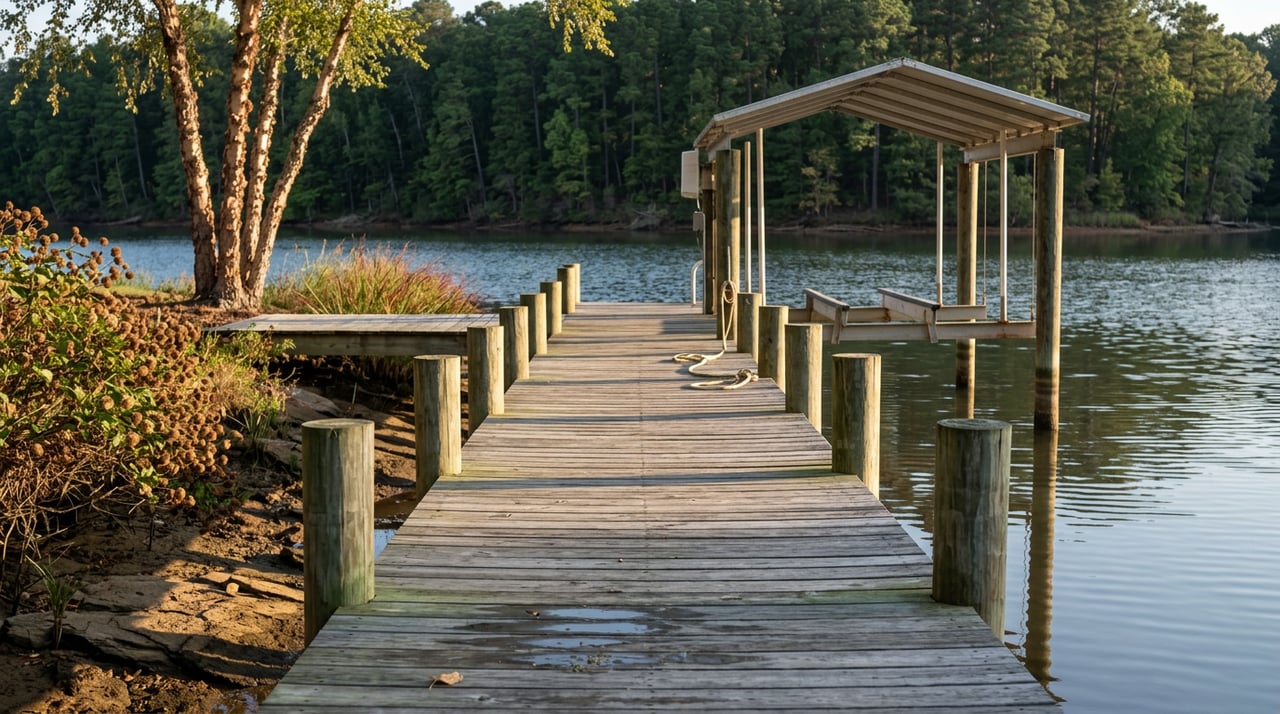
Waterfront listings may describe a dock as included, with details in a survey, photos, or listing remarks. Buyers should check whether the dock permit can be transferred with the property.
Duke Energy says the dock permit does not transfer automatically; the buyer must apply to move it into their name.
Lake Wylie sits inside Duke Energy's FERC project boundary, which means the company, not York County and not the closing attorney, decides whether a dock is legally allowed to sit in the water. County government has actually said this in writing. York County's own permitting FAQ states plainly that the county does not issue permits for docks on Lake Wylie, only for the electrical connection running to one, and directs anyone with a dock question to Duke Energy's Lake Management team instead. York County handles the electrical connection, while Duke Energy handles the dock permit.
That distinction matters during a waterfront transaction.
Transferring the Permit Is What Triggers the Inspection
A Lake Wylie dock permit is issued to a person, not to a parcel. When a property sells, the existing permit stays under the seller's name until someone applies through Duke Energy's Lake Access Permit System to move it into the buyer's name. That application is not a formality. It triggers a physical inspection.
If a previous owner added a covered slip, extended a walkway, or built a boat lift that was never part of the original application, that mismatch can surface during this inspection.
Sellers can request their permit file before listing, giving them an opportunity to review the documented history in advance.
Why This Summer Makes the Gap Harder to Ignore
Lake Wylie is a managed reservoir, and Duke Energy tracks its level on a relative hundred-foot scale, where 100 represents full pond, 569.4 feet above sea level. The Lake Wylie Marine Commission sets a target operating level of 97 feet and a minimum of 93.
The lake has spent much of the past year below that target. A stretch of below-normal rainfall ran from August 2025 through June 2026, and North Carolina's statewide drought update released August 6, 2026 still listed Lake Wylie among the reservoirs sitting below target elevation, even after a wetter July eased conditions elsewhere in the state. As of mid-August 2026, real-time gauge readings had the lake around 96 feet on that hundred-foot scale, roughly a foot under target and close to four feet under full pond. Levels have been climbing since a mid-May low point, but the lake has not caught back up.
A foot or two of drop doesn't sound dramatic on a lake this size, but it changes what's visible at the shoreline. Cribbing, added decking, or shoreline stabilization work that normally sits underwater at full pond can be sitting in open air this year, in plain view during a walkthrough or a due diligence inspection, in a way it simply wasn't during a wetter summer. Low water does not change Duke Energy's permit records, but it can make additions, repairs, or shoreline work that were not part of the original permit easier to see.
Who Actually Handles What
A closing attorney handles title work, funds disbursement, and recording the deed, protecting your title. They are not the one who confirms your dock is legal, because that was never part of their job.
| Task | Who handles it |
|---|---|
| Title search, closing funds, deed recording | Closing attorney |
| Dock legality and permit transfer | Duke Energy Lake Services, via the Lake Access Permit System |
| Electrical connection to an existing dock | York County permitting office |
A clean closing on the title side tells you nothing about whether the dock the seller called "included" will pass a transfer inspection. Those are two separate systems, run by two separate authorities, and neither one automatically checks the other's work.
A Due Diligence List That Actually Fits Lake Wylie
For anyone under contract on Lake Wylie waterfront, right now, in either direction:
- Ask the seller for the actual Duke Energy permit number and a copy of the permit itself, not just a photo of the dock or a line in the listing sheet.
- Confirm the shoreline classification for that specific parcel with Duke Energy Lake Services. Shoreline classification can affect whether a private dock is allowed.
- If the seller can't produce clean permitting history, start the transfer application before your due diligence period closes, not after you're already committed to the purchase.
- Build real time into your timeline. If the inspection turns up a modification that needs fixing, any related construction permit has its own timeline once issued, and a contractor needs to be lined up before that timeline starts.
- Treat the dock as its own due diligence item, separate from the general home inspection, since it answers to a different set of rules than the house does.
For Sellers, the Same List Runs in Reverse
If you own Lake Wylie waterfront and you're thinking about listing, the strongest move is to request your own Duke Energy permit file before you go to market, not after a buyer's due diligence period is already ticking. If a past owner made a change that was never formally permitted, knowing about it before listing gives you time to address it.
That is the same logic behind good listing preparation generally. A home may show well while still having an unresolved dock question to address before listing.
A Few Questions Worth Answering Directly
Does a Lake Wylie dock permit transfer automatically when the property sells? No. The existing permit stays under the seller's name until a separate application moves it into the buyer's name through Duke Energy's Lake Access Permit System, and that application includes a physical inspection of the structure.
Who do I actually contact about a dock permit on Lake Wylie? Duke Energy Lake Services, not York County. The county has said directly that it does not issue dock permits, only electrical connection permits tied to a dock.
Does this year's low water put existing dock permits at risk? Low water doesn't change what's on file with Duke Energy. It does make it easier to see additions, repairs, or shoreline work that were never part of the original permit, since structures normally submerged at full pond are currently sitting closer to open air.
If you're weighing a Lake Wylie listing or you're deep in due diligence on a waterfront purchase, it helps to have someone walk through what's actually on file early in the process. Tanaya Ewell works this market regularly and can help you sort out what needs checking before you're under a deadline to find out. Get a Free Home Valuation to start the conversation.
This article is general information, not legal, tax or financial advice. Consult a qualified professional about your situation.