If you want easier access to Charlotte without giving up space, price flexibility, and a strong everyday routine, Gastonia likely deserves a closer look. Many buyers and relocating households are trying to balance commute time with home value, and that trade-off matters even more when you plan to drive or travel into Charlotte regularly. The good news is that Gastonia offers a practical mix of interstate access, transit options, and local amenities that can support that lifestyle. Let’s dive in.
Why Gastonia draws Charlotte commuters
Gastonia sits on one of the region’s main travel corridors, and that shapes how daily life works here. The city says Interstate 85 runs through the middle of Gastonia and includes eight interchanges within the city.
That kind of access matters if your work, appointments, or regular plans pull you east toward Charlotte. It also helps explain why Gastonia continues to appeal to buyers who want a Charlotte-area location with different housing costs and a more flexible range of home styles.
What the Charlotte commute looks like
For most commuters, the Charlotte connection is straightforward: I-85 is the main spine. The city reports that about 50,000 cars a day travel through Gastonia on I-85, which gives you a clear picture of how important this corridor is for regional movement.
In real terms, that means your commute is usually less about finding a route and more about managing timing. Peak-hour traffic is part of the experience, not an occasional surprise, so planning your departure windows can make a real difference.
I-85 remains the key route
If you plan to drive into Charlotte, I-85 will likely be central to your routine. North Carolina DOT is widening roughly 10 miles of I-85 from Gastonia to Belmont, which reflects how heavily used this stretch is.
That does not remove the need for commute planning, but it does show continued investment in the corridor. If you are deciding whether Gastonia works for your schedule, it helps to think about your typical work hours, how often you need to be in Charlotte, and how much flexibility you have during the week.
The 85X gives you a direct transit option
If you would rather avoid driving every day, CATS 85X provides direct weekday service from the Gastonia Park & Ride to Uptown Charlotte. According to CATS, the route includes Wi-Fi, climate-controlled buses, priority seating, and free parking at park-and-ride locations.
For some commuters, that setup can make the trip feel more productive and less tiring. If your job is based in or near Uptown, the 85X may be worth comparing against the cost and stress of daily driving.
Getting around once you are in Gastonia
Your local transportation picture matters too, especially if you want your daily errands to feel simple before or after work. Gastonia Transit replaced fixed-route local buses with GoGastonia, an on-demand van service beginning July 1, 2024.
That means local trips inside Gastonia should be thought of as on-demand rather than route-based. If you are used to a traditional city bus grid, this is an important difference to understand before you move.
GoGastonia changes local trip planning
For everyday needs like short trips across town, local errands, or connecting to other destinations, GoGastonia adds flexibility without relying on fixed routes. This can be especially helpful in a city where not every household has a vehicle and where the city continues to emphasize sidewalks, greenways, and transportation options.
Gastonia also reports about 132 miles of existing sidewalk and 4.6 miles of greenway trails. That supports a more connected feel for local movement, even if your work commute to Charlotte is still mostly car- or express-bus-based.
Why housing value gets attention here
One of the biggest reasons people consider living in Gastonia and commuting to Charlotte is simple: housing costs are lower on major metrics. Based on 2020 to 2024 ACS data, Gastonia’s median owner-occupied home value was $277,600 compared with $385,700 in Charlotte.
The same pattern shows up in rental costs. Median gross rent was $1,204 in Gastonia versus $1,612 in Charlotte, while median household income was $64,059 in Gastonia and $82,068 in Charlotte.
That does not mean one city is better than the other. It means Gastonia may offer a different value equation if you are prioritizing space, budget flexibility, or a specific type of home while staying connected to Charlotte.
Housing types give you options
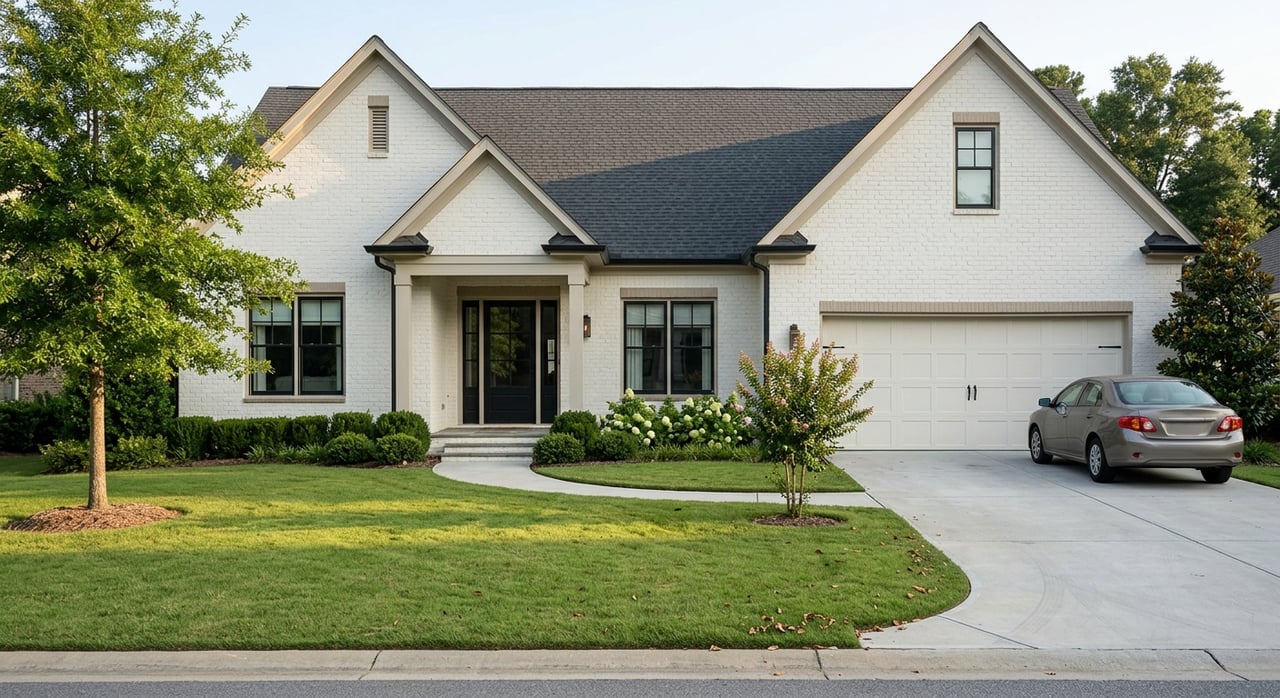
Gastonia’s affordable housing plan says single-family homes account for more than 70% of housing units. The same plan also discusses ADUs, townhomes, duplexes, and small multifamily options as part of the city’s housing supply conversation.
For you as a buyer, that points to a market with a strong single-family base and some variety depending on your goals. If you are moving up, relocating, or trying to balance commute access with room to spread out, that mix can be useful.
Neighborhood character and home style
Gastonia is not just one look or one type of neighborhood. Depending on where you focus, you can find established historic areas, downtown-adjacent housing, and more conventional single-family settings.
That range matters because commute buyers often care about more than distance alone. You may want a home that fits how you actually live, entertain, work remotely, or recharge after a long day.
Historic districts offer distinctive character
Gastonia has two locally zoned historic districts: York-Chester and Brookwood. The city recognizes them for their architecture, lot layout, development pattern, and historic significance.
The city also notes that exterior changes in those districts require Historic District Commission review and a Certificate of Appropriateness. If you love older homes and architectural detail, that may feel like a benefit because it supports the historic character. If you want fewer design restrictions, it is something to consider early.
Styles referenced in the city’s design standards include Victorian/Queen Anne, Craftsman/Bungalow, Tudor Revival, Colonial Revival, Minimal Traditional, and Ranch. That gives you a sense of the architectural variety available in these areas.
Downtown adds another housing option
Downtown Gastonia offers more than storefronts and office space. The city’s downtown guide says there are homes for sale or lease in a range of styles, sizes, and price ranges.
If you like being near restaurants, coffee shops, entertainment venues, historic buildings, public art, and pedestrian-friendly sidewalks, downtown may deserve a look. The area also includes parking, a conference center, an arts district, and a downtown social district along Main Avenue in the FUSE area.
Daily life beyond the commute
A successful move is not only about getting to work. It is also about what your weeknights, weekends, and quick in-between moments feel like once you are home.
Gastonia has a solid lineup of parks, trails, and community amenities that can add real lifestyle value. That is especially important if you want more breathing room outside of your workday.
Parks support an active routine
Gastonia Parks & Recreation says it provides both active and passive recreation while preserving open space. That shows up in the city’s park system and greenway network.
The Avon & Catawba Creeks Greenway connects Lineberger Park to Ferguson Park. The Highland Rail Trail begins near the Gastonia Police Department and has future plans to connect to Rankin Lake Park.
A few standout park examples include:
- Lineberger Park with a playground, splash pad, pool, walking trails, and a greenway trailhead
- Rankin Lake Park with an approximately 80-acre lake, a 1.569-mile paved loop, fishing piers, boat rentals, disc golf, and boardwalks
- Martha Rivers Park with athletic fields, trails, picnic shelters, and Operation Playground
- Bradley Center & Park with athletics, STEM programs, summer camps, tennis leagues, disc golf, and events
These kinds of amenities can make a real difference if you want your home search to reflect your full lifestyle, not just your drive time.
Cultural and family amenities add depth
Gastonia also has local destinations that give the city more day-to-day identity. The Schiele Museum of Natural History is a city-owned science and family amenity that adds another layer to downtown living and weekend plans.
For many buyers, that matters. A city feels more livable when you have places to explore, walk, gather, and enjoy without always heading into Charlotte.
Is Gastonia a good fit for you?
Gastonia can be a strong fit if you want Charlotte access but do not need to live in Charlotte proper. It is especially worth considering if your move is driven by housing value, home size, or the desire for a different daily pace while keeping a workable connection to major job centers.
At the same time, it helps to be realistic. The commute structure is still largely highway-led, and local transit inside Gastonia is on-demand rather than a large fixed-route network. For Charlotte-bound commuters, the practical choices are usually driving or using the 85X express bus.
That is why the right move often comes down to your schedule, work location, and lifestyle priorities. If you want a home that supports your bigger goals while keeping Charlotte within reach, Gastonia may offer the balance you have been looking for.
If you are weighing Gastonia against other Charlotte-area options, working with someone who understands both lifestyle fit and local market strategy can help you move with more clarity. When you are ready to explore your next step, connect with Tanaya Ewell for calm, informed guidance.
FAQs
Is living in Gastonia and commuting to Charlotte common?
- Yes. Gastonia’s connection to Charlotte is centered on I-85, which runs through the city and carries about 50,000 cars a day through Gastonia, making it a major commuter corridor.
What is the main route from Gastonia to Charlotte?
- For most drivers, I-85 is the main route. It runs through Gastonia and serves as the primary commuting spine toward Charlotte.
Is there a bus from Gastonia to Uptown Charlotte?
- Yes. CATS 85X offers direct weekday service from the Gastonia Park & Ride to Uptown Charlotte.
How do local trips work in Gastonia?
- Local transit inside Gastonia is now handled through GoGastonia, an on-demand van service rather than fixed-route local buses.
Are homes in Gastonia usually less expensive than homes in Charlotte?
- On key housing metrics, yes. Recent ACS data shows Gastonia has a lower median owner-occupied home value and lower median gross rent than Charlotte.
What kinds of homes can you find in Gastonia?
- Gastonia has a housing stock led by single-family homes, which account for more than 70% of units, along with options such as townhomes, duplexes, ADUs, and small multifamily properties.
Does Gastonia have historic neighborhoods?
- Yes. York-Chester and Brookwood are Gastonia’s locally zoned historic districts, recognized for their architecture, development pattern, and historic significance.
What amenities make Gastonia appealing beyond the commute?
- Gastonia offers parks, greenways, downtown restaurants and coffee shops, public art, entertainment venues, and destinations like the Schiele Museum of Natural History.